
Chimney repair is one of those jobs that only gets attention when something goes wrong. A bit of debris in the gutter. A crack you did not notice before. Sometimes it is a stain on the ceiling that sends people searching for answers. Until then, the chimney just sits there above the roof and most of us forget about it.
The problem is that a chimney takes constant exposure. Rain hits it from every angle. Frost gets into the mortar. Wind pushes against the stack year after year. Mortar joints start to crumble. Bricks loosen. Small issues turn into larger chimney repairs without much warning. By the time someone decides to inspect it properly, water leaks may already have started working their way into the building.
What Chimney Repair Actually Covers
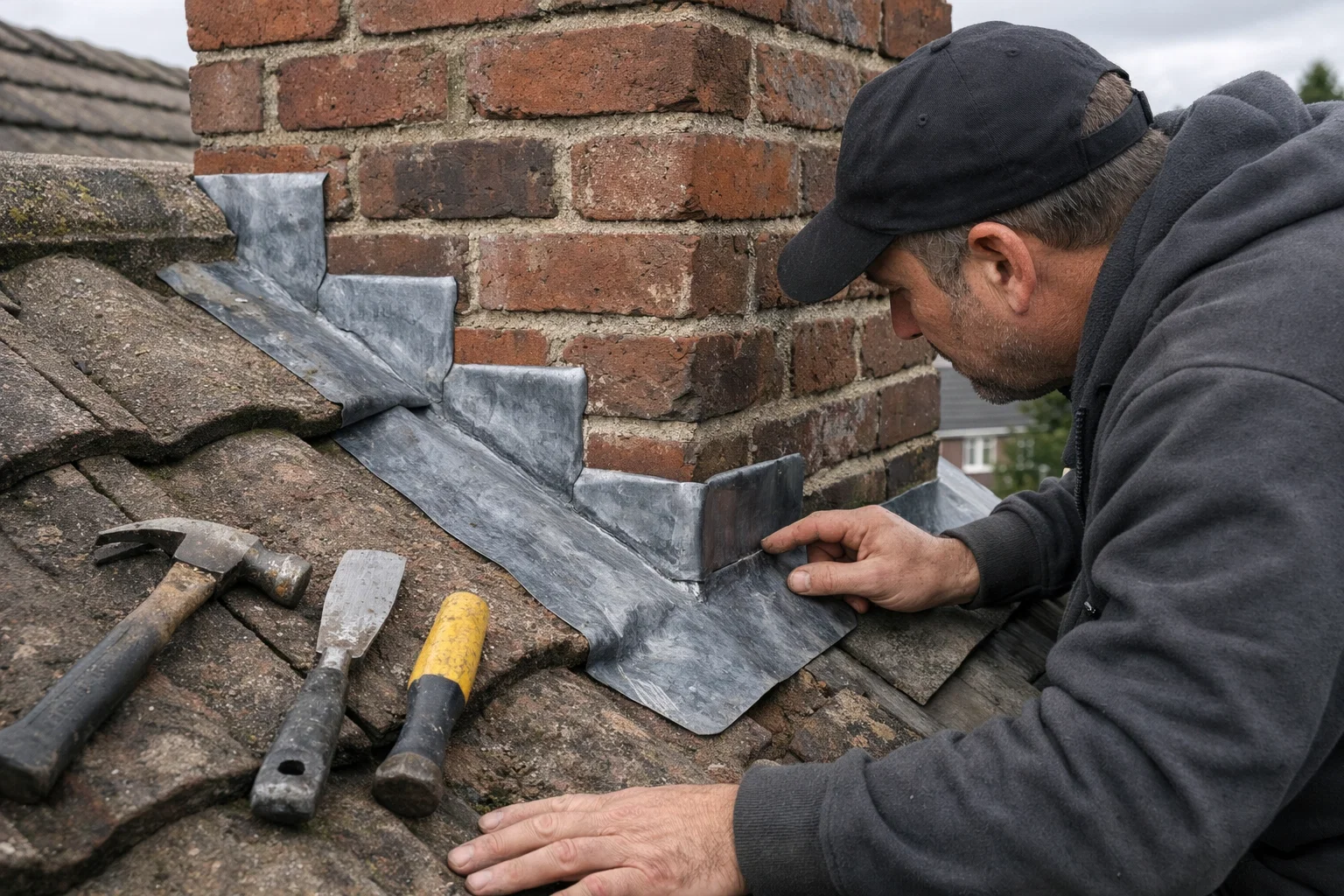
People often think chimney repair means replacing a few bricks. Sometimes it does. Other times it is chimney repointing, where old mortar has worn away and new mortar needs pressing back into the joints. If the chimney flashing has lifted or the lead flashings have split, water can track straight down into the roof. That turns into roof and chimney repair rather quickly.
There are also parts most homeowners never see. The chimney crown can crack. Chimney flaunching around the pots can break down. The chimney flue liner might need attention. In severe cases, damaged bricks higher up the chimney stacks create a safety risk. A proper look at the chimney usually reveals more than expected, especially after extreme weather conditions.
Chimney Repointing and Damaged Mortar
A lot of chimney repair work ends up being about mortar. It is rarely dramatic. It just slowly disappears. You might notice bits in the gutter or small gaps between the bricks if you look closely. Up on the stack, the mortar joints take the full force of rain and frost. Over time they weaken.
Chimney repointing means raking out that old mortar and putting new mortar back in. Sounds simple, but it makes a big difference. Once mortar starts failing, bricks loosen and water finds its way in. That is when you get water leaks inside the house. Leaving damaged mortar alone nearly always leads to a bigger repair later, especially after a cold winter.
Chimney Flashing and Lead Flashings Explained
Chimney flashing causes more trouble than most people realise. It sits where the chimney meets the roof and it has one job, which is to stop rain getting in. When chimney flashing lifts, cracks or pulls away from the brickwork, water slips straight through the gap. That is usually when a leaking chimney becomes obvious inside the loft.
Lead flashings tend to last well, but they do not last forever. Movement in the chimney stacks, storm damage or poor installation can all shorten their life. Chimney flashing repair often gets bundled into roof and chimney repair because once water reaches that point, other elements around the roof may already be affected. Sorting the flashing properly prevents water damage spreading further into the building.
Chimney Crown, Flaunching and Chimney Pots
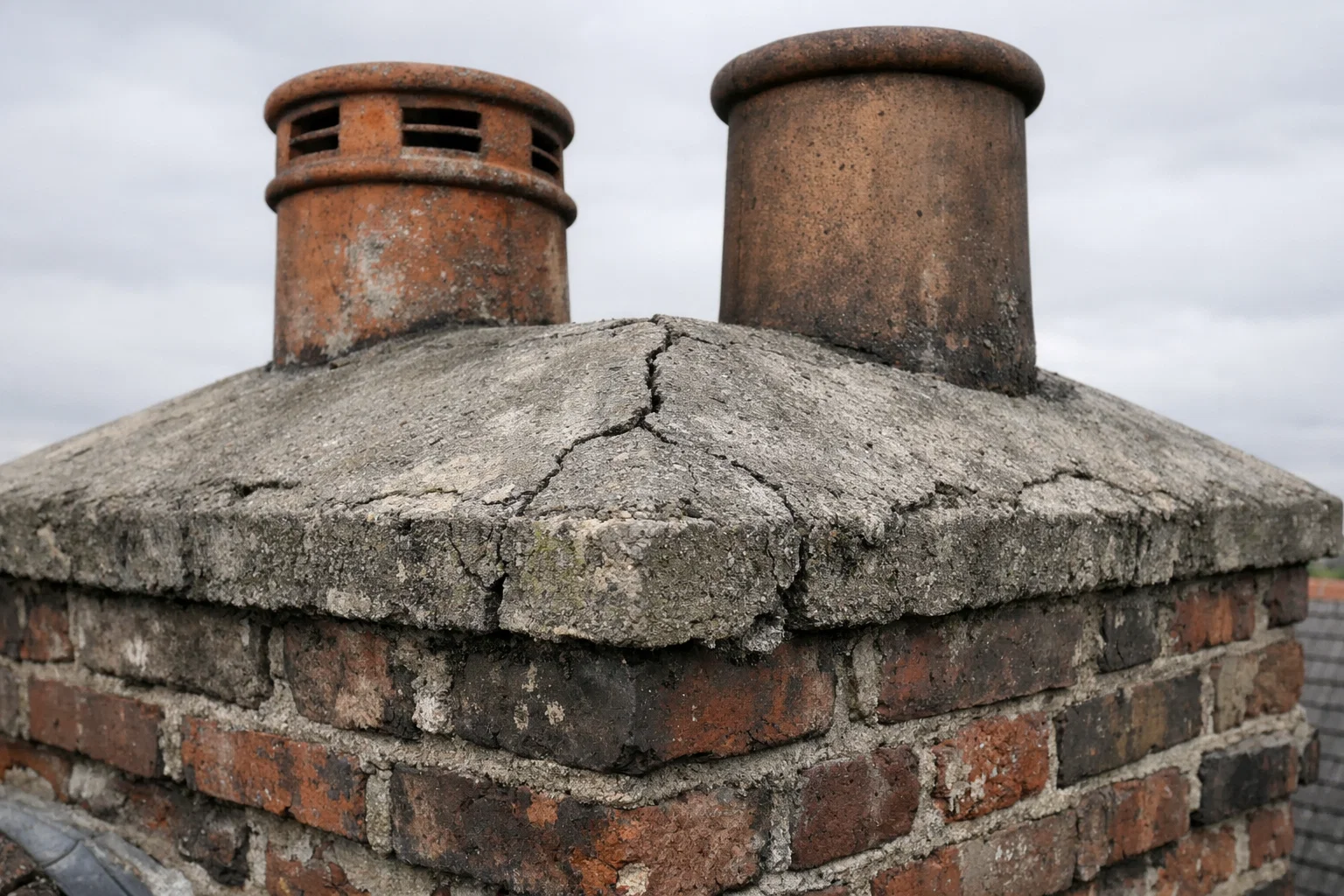
Most people never see the top of their chimney properly. Up there you have the chimney crown and the chimney flaunching, which help shed rain away from the flue and bricks below. When that top surface cracks, water sits in the gaps. After a few cold nights it expands and the damage spreads. It does not take long for small cracks to turn into proper splits.
Chimney pots can loosen as well. Strong winds and extreme weather conditions put pressure on them year after year. If a pot shifts or the flaunching breaks down around it, rain can run straight into the chimney flue. That is when debris, damp and sometimes water leaks start appearing lower down. These parts are small compared to the whole chimney, yet they often trigger chimney repair work that could have been avoided with earlier maintenance.
Chimney Repair Cost and What Affects It
Chimney repair cost is usually the first thing people ask about, which is fair enough. The answer depends on what is actually wrong. Repointing a section of mortar joints on a single chimney stack costs far less than rebuilding part of the structure. A small fix is one thing. A bigger repair involving damaged bricks or a cracked chimney crown is something else entirely.
Access also plays a part. Some houses allow safe ladder work. Others require scaffolding, especially if the roof is steep or the stack sits high above the ridge. That can push the overall cost up before the repair even begins. Materials matter as well. New mortar, replacement chimney pots or fresh lead flashings all add to the job. The average chimney repair cost varies depending on these details, so a proper inspection always gives a clearer picture.
Does Chimney Repair Require Scaffolding
People often ask if scaffolding is needed for chimney repair. Sometimes yes. Sometimes not. It really comes down to the height of the house and how easy it is to reach the chimney safely. A small repair on a lower building might not need much setup. A tall chimney stack above a steep roof is a different story.
Scaffolding does add to the overall cost, which nobody loves, but it makes the job safer and steadier. Trying to fix damaged bricks or sort chimney flashing without proper access usually causes more trouble. If the stack feels unstable or the chimney crown is cracked, safe access becomes even more important. The last thing anyone wants is debris coming loose while the repair is under way.
Maintenance, Inspections and Preventing Water Damage
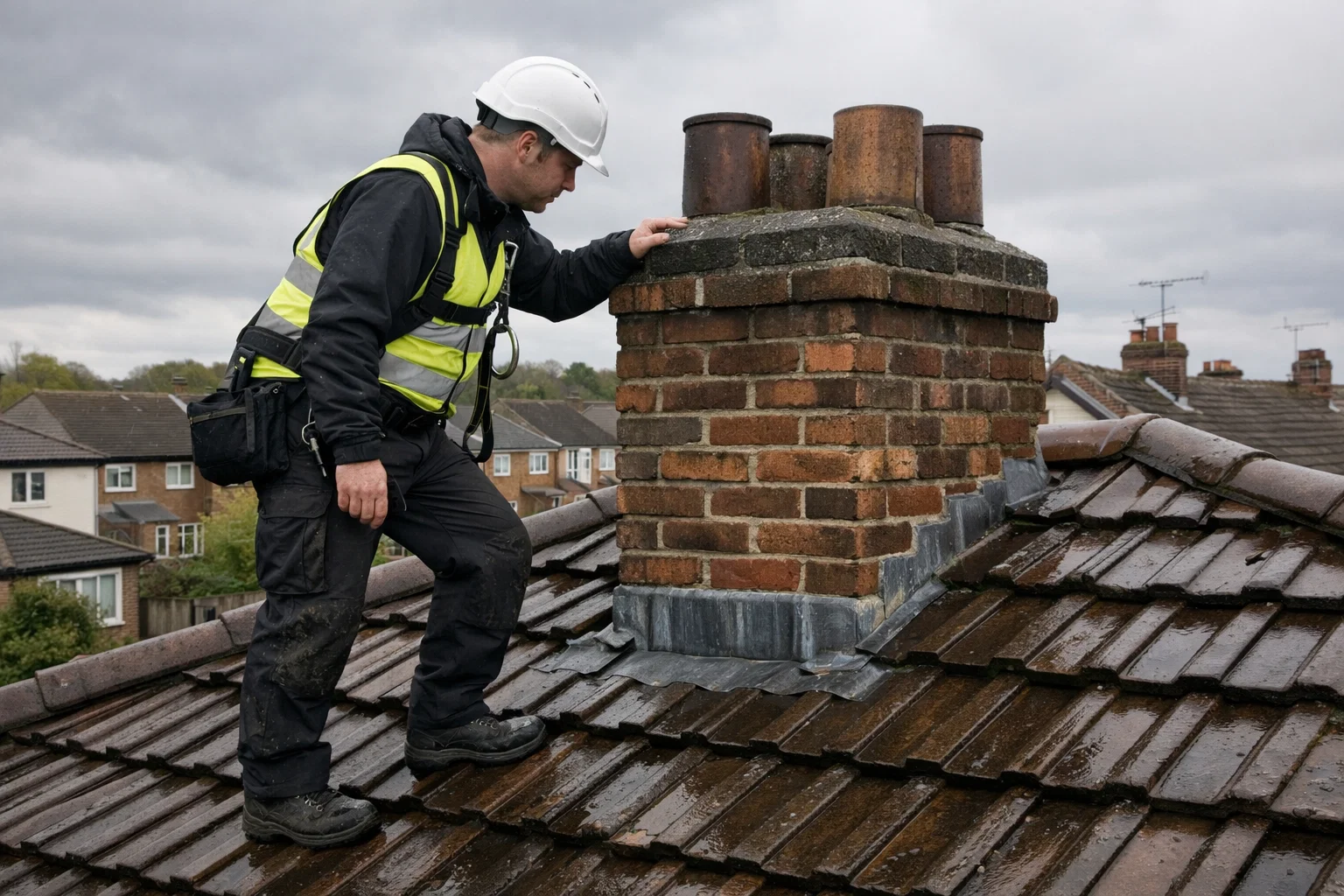
Most chimneys do not fail all at once. They slowly wear down. A bit of cracked mortar here. A loose brick there. It rarely looks urgent at first. That is why chimney repair often gets delayed until the problem becomes obvious.
Rain will always find the weakest point. Once water gets into the mortar or behind the flashing, it tends to hang around. Over time that leads to damp patches and water damage inside the house. Keeping an eye on the chimney from time to time makes a difference. It does not need constant attention, just the occasional look after heavy rain or storm damage.
A Final Word on Chimney Repair
Chimney repair is rarely urgent until it suddenly is. Most stacks stand for decades with very little attention. Then one winter, after enough rain and frost, the weak spots start to show. A cracked joint, a leaking chimney, a bit of debris on the path. That is usually how it begins.
Sorting issues early keeps the job smaller and the cost easier to manage. Whether it is chimney repointing, chimney flashing repair or replacing damaged bricks, the aim is simply to keep the chimney safe and the roof watertight. Once the structure is back in good condition, it tends to stay that way for years with only light maintenance.


